Avoiding Failure of Larger Diesel Fuel Tank on a Sprinter
A Small Detail Worth Considering When Installing the S&B 40-Gallon Fuel Tank on a Mercedes Sprinter
After recently installing an S&B 40-gallon fuel tank on my Mercedes Sprinter, se noticed a small detail that may be worth considering for anyone performing the same upgrade.
First, let us say that the installation was straightforward, and the additional fuel capacity is a huge improvement for long-distance travel. However, while reviewing the installation process, we found ourselves paying particular attention to the fuel filler neck connection and the placement of the check valve.
Understanding the Difference Between the OEM and S&B Designs
On the factory Mercedes-Benz fuel tank, the check valve is integrated into the tank itself. This means that if the filler neck hose were to become disconnected or experience a clamp failure, the check valve would help prevent the entire contents of the tank from rapidly draining.
The S&B design handles this differently.
During installation, the check valve is removed from the factory tank and inserted into the lower portion of the fuel filler hose before the hose is connected to the new tank inlet. Functionally, the system works as intended, but it changes where the check valve is located in relation to the hose connections.
As a result, the lower hose connection between the filler neck and the tank becomes more critical. If that connection were ever to fail due to a loose or damaged clamp, there would be little to prevent the fuel tank from draining through the disconnected hose.
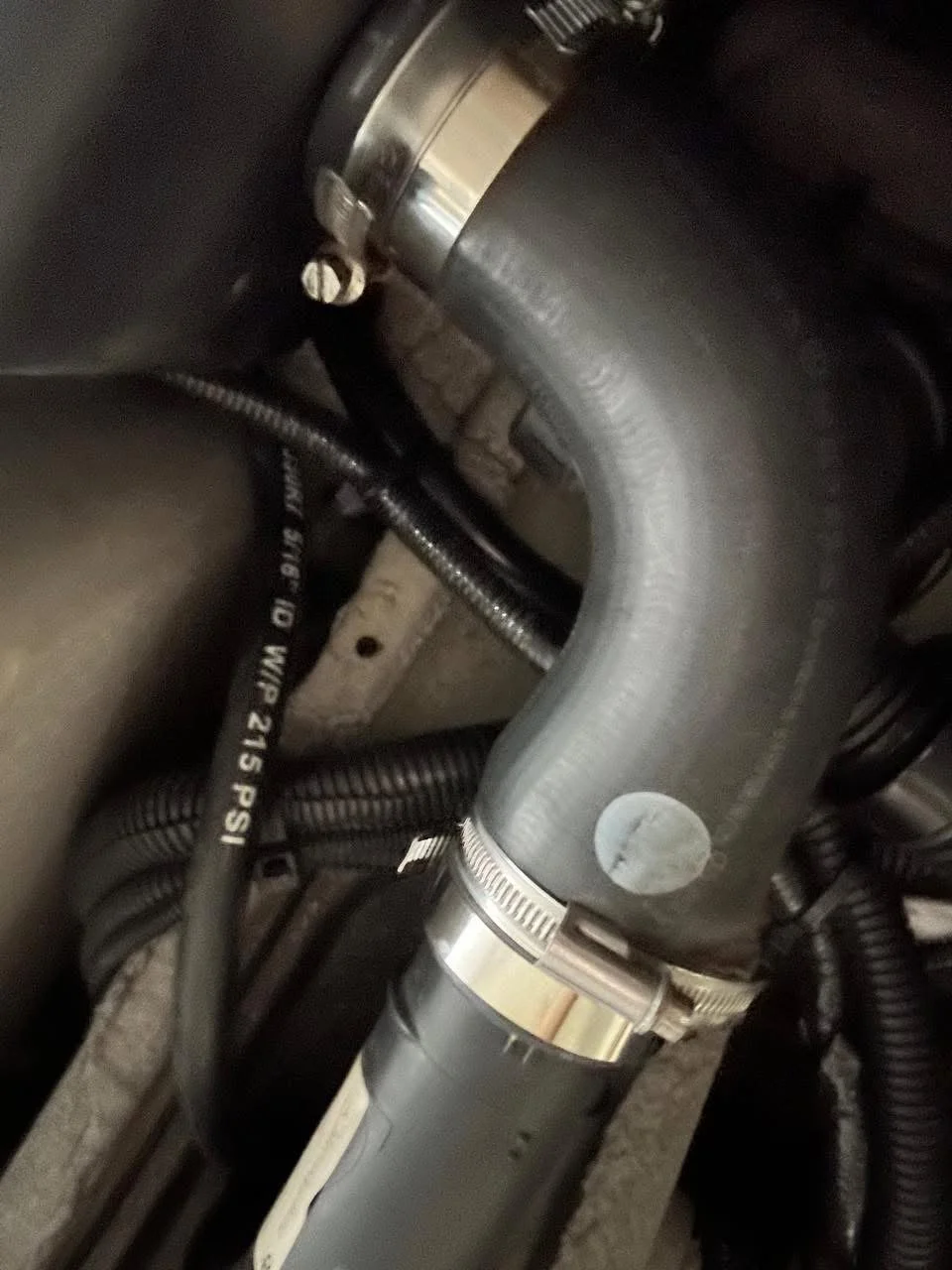
Why we Chose to Add a Second Clamp
We did not see any recommendation in the installation instructions or videos regarding the use of double hose clamps on this connection. To be clear, S&B does not specify that this is necessary, and there is no indication that the supplied installation method is inadequate.
However, observing in marine applications, we are accustomed to seeing double-clamped hose connections used on critical systems below the waterline where a single-point failure could have significant consequences.
While a Sprinter fuel system is obviously a very different application, the concept of adding redundancy for a few dollars seemed reasonable to us.
For that reason, we chose to install a second stainless-steel hose clamp on the lower filler hose connection. It’s a simple modification that adds another layer of security to one of the few locations where a clamp failure could potentially result in a significant fuel leak.
Not a Requirement—Just an Observation
This isn’t intended as criticism of the S&B design. The tank has been well-engineered and widely used within the Sprinter community with excellent results.
Rather, this is simply an observation from my own installation. Had the check valve remained integrated into the tank as it is on the OEM Mercedes unit, we personally would have been completely comfortable with a single clamp. With the check valve relocated into the hose, adding a second clamp felt like inexpensive insurance.
For anyone installing one of these tanks, it’s a detail worth considering while you already have everything apart and accessible.
Sometimes the smallest decisions during an installation can provide the most peace of mind hundreds of miles from the nearest fuel station.