Circling a Continent: A Journey Along Australia’s Highway 1, the World’s Longest National Highway
There are road trips… and then there’s Highway 1.
More than 14,500 kilometers (9009 miles) of open road, circling an entire continent. A journey so long that the seasons change around you—tropical storms in the north, alpine winds in the south, red-desert heat in the west. In context to you Americans, going from New York to Los Angeles for example (the famous Cannonball Run) is 4495km (2,793 mi) This is 4x that length. It’s like going coast to coast to coast to coast in the United States. For you European’s, Edinburgh, Scotland to Istanbul, Turkey is only 3653 km (2,270 miles)
Traveling Highway 1 isn’t just a drive.
It’s a circumnavigation of Australia’s soul.
Below is the story of a lap around the nation—part travel journal, part love letter to the road, and part invitation for you to chase the same horizon.
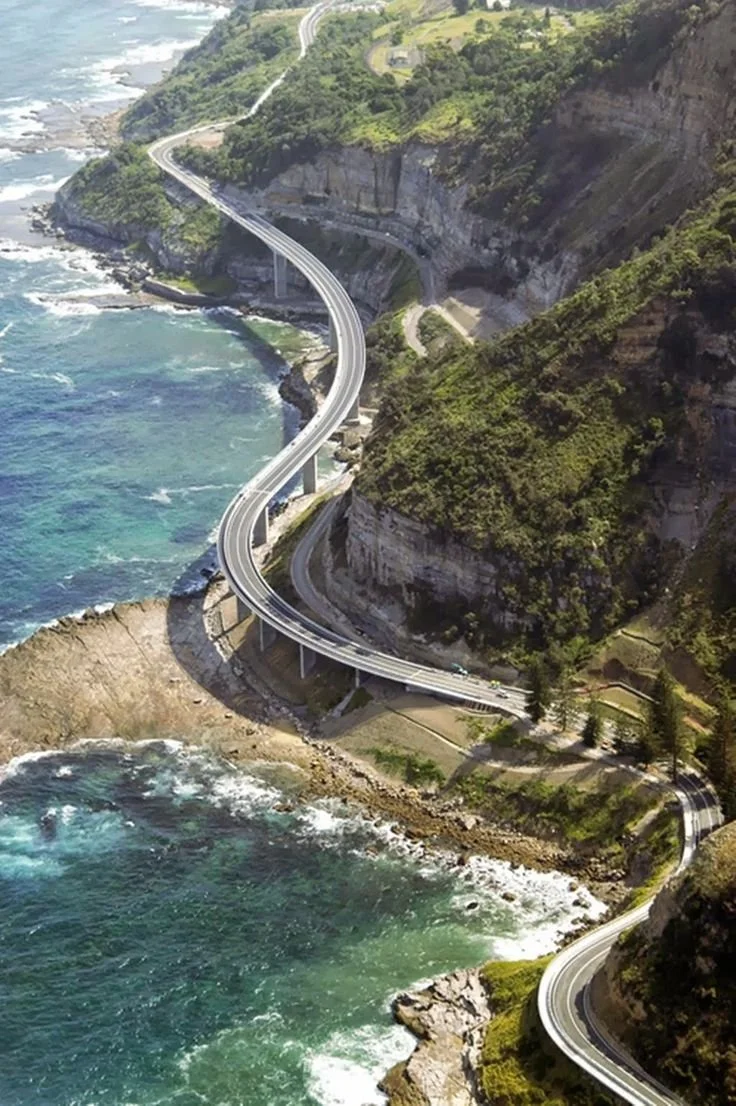
Seacliff Bridge runs along the east coast just north of Wollongong, NSW, Australia
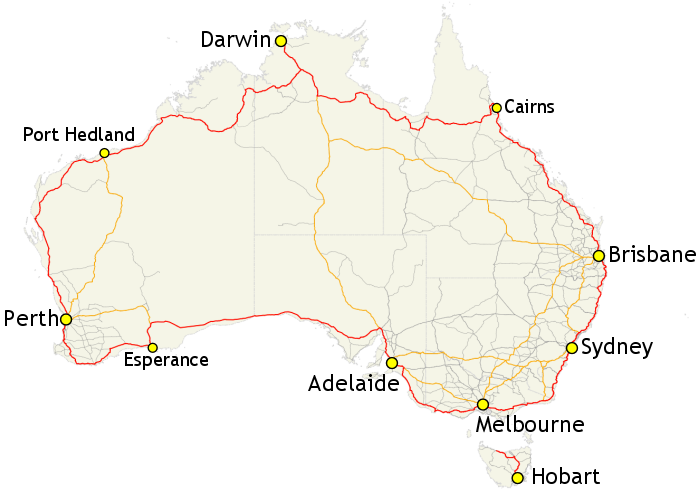
Unlike most major highways, Highway 1 isn’t a straight line connecting two endpoints—it's a circle that follows the outline of the continent. It links every mainland state capital and dozens of regional cities.
Its route shifts dramatically in character:
Sydney → Brisbane: lush coastal forests, surf towns, and sweeping ocean views
Cairns → Darwin: t
Darwin → Broome: vast tropical savannah, crocodile country, and long, empty horizons
Perth → Esperance: this long haul stretch includes the famously desolate Nullarbor Plain, including the longest straight road on Earth
Adelaide → Melbourne: rolling vineyards, coastal cliffs, and historic settlements
Hobart → Melbourne: and
Melbourne → Sydney: alpine foothills and rugged ocean edges
Because Australia’s landscapes change so dramatically, Highway 1 functions almost like a living cross-section of the country itself.
Over the decades, Highway 1 has expanded and evolved:
Many sections have been widened, duplicated, or fully rebuilt to support freight, tourism, and population growth. In urban areas—like Melbourne’s M1 or Sydney’s Pacific Highway—Highway 1 becomes a major expressway. In the outback, it can shrink to a lonely two-lane ribbon.
As road standards increased, sections were renumbered into the newer National Highway, A, and M route classifications. But despite the overlays, the “1” designation still persists across the entire route—proof of its foundational place in Australia’s transport network.
Highway 1 even features in endurance challenges like the “Lap of Australia,” where adventurers try to circumnavigate the continent faster than anyone before—sometimes in record-breaking runs of just days.
Day 1–10: The East Coast — Where Cities Meet the Sea
Sydney → Brisbane: lush coastal forests, surf towns, and sweeping ocean views
The first stretch reels you in gently: Sydney’s glass skyline fading in the mirror, the humid breath of the Pacific pressing against your windows.
Byron Bay smells like sunscreen and mangoes. Surfers drift lazily past in search of perfect breaks. At roadside cafés, travelers compare odometer numbers like badges of honor.
The highway rolls into Queensland, past sugarcane fields that glow gold at sunset. This is the part of the trip where you still feel civilized—where a flat white is never too far away.
Day 11–22: Into the Top End — Croc Country, Storm Clouds & Silence
North of Cairns, Highway 1 begins to feel wild.
The air thickens. Storms crack purple across the sky. Roadhouses become scarce little islands of humanity, each with a petrol pump, a freezer of ice creams, and a tired dog sleeping out front.
Crossing into the Northern Territory, the world widens. The distances stretch. You begin carrying extra water, then extra fuel, then extra caution.
Darwin hums like a frontier town—humid, gritty, alive. Croc warning signs appear at boat ramps. Even the silence up here felt louder, like the land was teaching me to pay attention.
Darwin → Broome: vast tropical savannah, crocodile country, and long, empty horizons
Day 23–36: The Wild West — Endless Horizon & the Desert that Tests You
Western Australia is where Highway 1 becomes mythic.
Between Broome and Port Hedland, the red earth glows like embers. Heat shimmer dances across the road until the whole world looks liquid. Truck road trains thunder by—three trailers long, shaking the ground. Port Hedland looks like it’s right out of Mad Max. The red dirt looks like it’s stained everything. The steel, concrete and buildings seams to have taken on the red early colors.
This is the Australia people romanticize:
The one that doesn’t care whether you survive it.
Nights cool down and the sky explodes with stars—the Milky Way so bright you feel like you can hear it. Every sunrise hits you like a new beginning.
Day 37–45: The Nullarbor — The Place Where the Earth Refuses to Bend
Nothing prepares you for the Nullarbor.
It’s not just empty—it’s endlessly empty, a horizon so flat your brain stops trying to interpret distances. Highway 1 slices straight through it: What was once the longest perfectly straight stretch of road in the world (now in Saudi Arabia) called the Eyre Hwy.
Here, fuel stops are spaced like lifelines. The wind roars off the Great Australian Bight, thundering against 300-foot limestone cliffs. Standing at the edge, you feel microscopic.
But the reward is freedom.
Pure, unfiltered, horizon-to-horizon freedom.
Day 46–55: South Australia — Salt Lakes, Wine Country & Sunburned Coast
After the Nullarbor’s emptiness, South Australia feels lush—almost indulgent. Pink salt lakes appear like hallucinations. Vineyards spill over gentle hills. Adelaide greets you with good food, better wine, and the kind of comfort you didn’t realize you missed.
Highway 1 winds calmly here, easing you back into civilization. Locals wave as you pass; everyone seems to have a story about “doing the lap.”
Day 56–65: Victoria & Tasmania (Optional Detour) — Coastlines Carved by Wind
Victoria offers cool ocean winds and tight bends along cliffside roads. The Great Ocean Road feels like a victory lap, with the Apostles standing like weather-beaten guardians.
Some travelers ferry to Tasmania—its own loop of wild landscapes, moody forests, and empty beaches. It’s not technically Highway 1, but spiritually, it belongs to the journey.
Day 66–75: The Return to New South Wales — From High Country to Home
The final stretch feels reflective.
The landscapes soften. Beaches widen. Small towns blend into one another with nostalgic familiarity—fish-and-chip shops, surf shops, weekend markets.
Rolling back into Sydney, you realize Highway 1 didn’t just bring you full circle around a continent.
It brought you full circle within yourself.
The road changed you.
The silence changed you.
The scale of Australia—massive, ancient, indifferent—reshaped the way you see your place in the world.
Why Highway 1 Matters: More Than Just the Longest Highway
Highway 1 isn’t a road—it’s a living thread that ties together one of the most geographically extreme countries on Earth.
It’s the world’s longest national highway because:
Australia needed a single coastal loop to connect its major cities
The vast distances demanded a unified, coherent transport corridor
The road evolved with the nation, absorbing new segments, upgrades, and purpose
But more importantly, Highway 1 is a story—one you write with every kilometer you travel.
And the only way to understand its scale is to drive it.
Check out our other Travels

Will a Sprinter be banned from driving through Zion now? Starting June 7, 2026, Zion National Park in Utah will enforce strict size and weight restrictions for vehicles on the Zion-Mt. Carmel Highway between Canyon Junction and the East Entrance.