Understanding Your T1N Sprinter Van Coolant Temperature
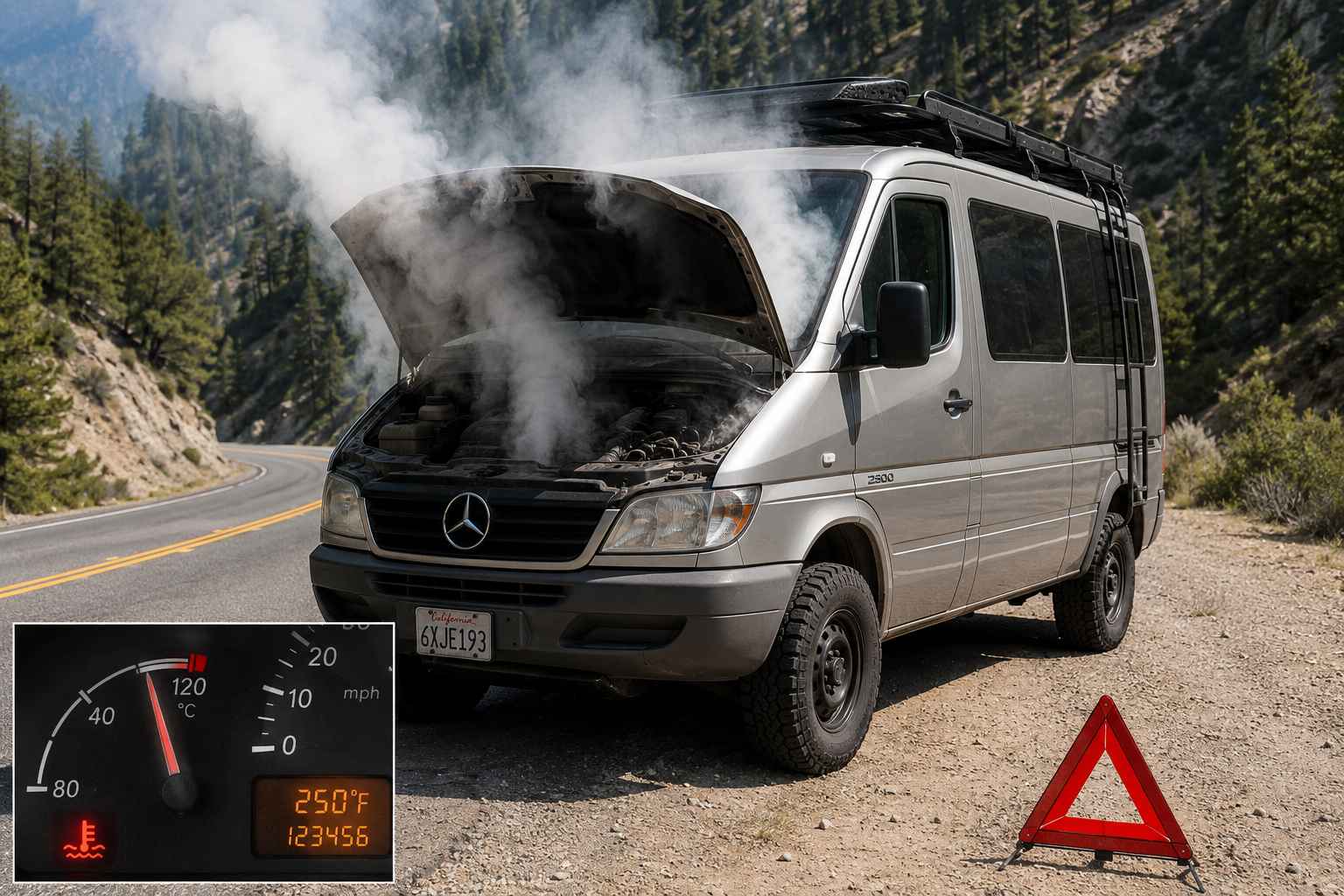
What Your Temperature Gauge Is Really Telling You
One of the most common questions from new T1N Sprinter owners is:
“My coolant temperature is over 200°F... is my van overheating?”
Usually, the answer is no.
The OM647 and OM612 diesel engines were designed to operate across a fairly broad temperature range. In fact, seeing the coolant temperature move up and down throughout a drive is completely normal. Long grades, towing, headwinds, high ambient temperatures, air conditioning use, and stop-and-go traffic all affect coolant temperature.
Instead of worrying about one specific number, it's much more useful to understand what each temperature range actually means.
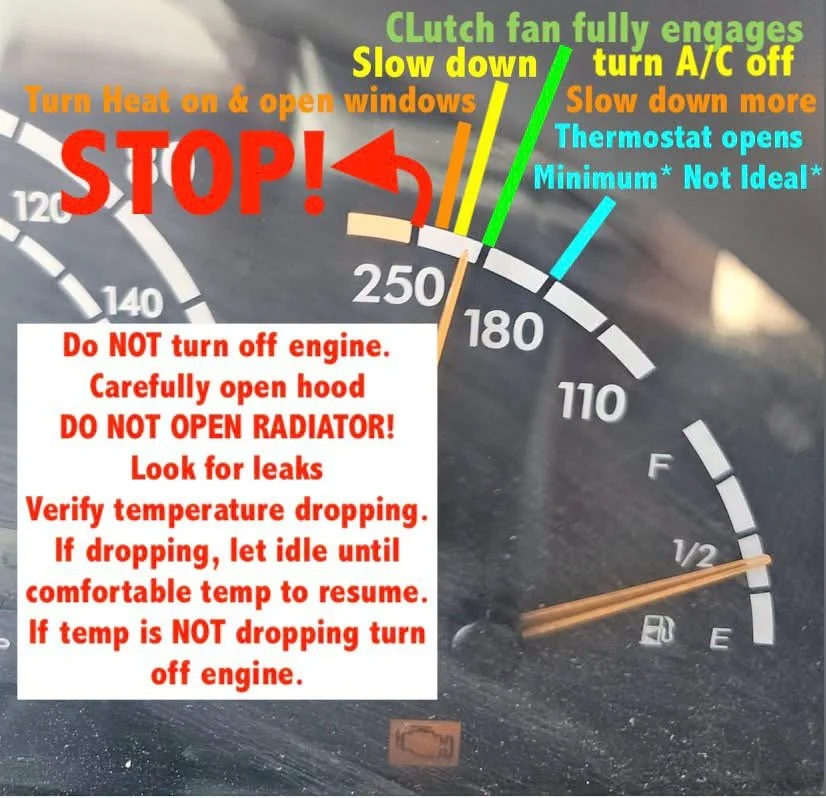
🧊 Around 180°F – The Thermostat Begins Opening
At approximately 180°F (82°C) the thermostat begins to open.
This is essentially the minimum normal operating temperature for the engine. Before reaching this point, the thermostat keeps coolant circulating primarily within the engine so it can warm up quickly.
If your Sprinter struggles to reach 180°F after several miles of driving, especially in moderate weather, it may indicate:
A thermostat stuck partially open
Reduced fuel economy
Less cabin heat
Increased engine wear from running too cool
For a healthy engine, you generally want to see coolant temperatures climb above 180°F during normal driving.
💚 Around 210°F – The Sweet Spot
Around 205–210°F is where the T1N is happiest under normal operating conditions.
By this point:
The thermostat is fully open.
The engine is at peak operating efficiency.
Oil has reached proper operating temperature.
The viscous fan clutch begins to engage more aggressively as temperatures continue climbing.
On long freeway climbs or hot summer days, seeing temperatures around 210°F is perfectly normal.
Don't panic. Mercedes expected it.
⚠️ Around 230°F – Time to Help the Cooling System
Once coolant temperatures climb to approximately 230°F, it's time to start paying attention.
The engine isn't necessarily overheating yet, but you're approaching the upper end of its comfortable operating range.
If you reach this point:
Ease off the throttle.
Reduce speed if possible.
Downshift if necessary to keep engine RPM in an efficient range.
Turn off the air conditioning if outside temperatures allow.
Often, simply reducing engine load by 5–10 mph is enough to stabilize temperatures.
Watch the gauge. If temperatures begin dropping again, you've likely avoided any further issues.
🥵. Around 240°F – Take Immediate Action
At 240°F, you're no longer just monitoring—you should actively reduce engine heat.
Recommendations include:
Slow down significantly.
Turn the A/C completely off.
Turn the cabin heater to maximum temperature.
Run the cabin blower on high.
While nobody enjoys roasting inside the van, the heater core functions as a small auxiliary radiator and can remove a surprising amount of heat from the cooling system. Many owners have successfully finished a mountain climb this way when ambient temperatures were extremely high.
🛑 Around 250°F – Pull Over Immediately
If coolant temperature reaches 250°F, it's time to stop.
Find a safe place to pull over as soon as possible.
‼️ Important:
Do NOT immediately shut the engine off.
Instead:
Leave the engine idling.
Keep the heater on full hot.
Open the hood if it's safe to do so.
Allow coolant to continue circulating.
Why?
When the engine is shut off, coolant circulation stops. The hottest areas inside the cylinder head can actually become hotter due to "heat soak," potentially increasing the risk of localized boiling or damage.
Many times you'll see temperatures begin falling within a few minutes simply by letting the engine idle.
If temperatures continue to climb—or refuse to come down—then shut the engine off and call for assistance.
Never Open the Cooling System While Hot
This cannot be emphasized enough.
Never remove the radiator cap or coolant reservoir cap while the engine is hot.
The cooling system operates under pressure.
Opening the cap while coolant is above boiling temperature can instantly release superheated coolant and steam, causing severe burns.
Always allow the engine to cool completely before opening the cooling system.
What Matters More Than the Number
Rather than obsessing over a single temperature reading, pay attention to the trend.
Ask yourself:
Is the temperature stable?
Is it slowly climbing?
Did it suddenly spike?
Does it quickly recover after cresting a hill?
A temporary rise during a steep mountain climb is normal.
A temperature that continues climbing after the road levels out is not.
Learning how your Sprinter behaves under different loads will help you recognize problems long before they become expensive repairs.
A Healthy T1N Cooling System
As a general guideline:
Coolant Temperature
Below 180°F
180°F
205–210°F
230°F
240°F
250°F
Recommended Action
Monitor
Normal
Drive normally
Reduce speed, turn off A/C
Slow down, heater on full
Pull over, idle engine, monitor temperatures
What It Means
Still warming up or thermostat may be stuck open
Thermostat begins opening
Ideal operating range
Running hot
Very hot
Critical
Understanding these temperature ranges can turn what looks like a scary gauge into valuable information about what your engine is experiencing. A T1N that briefly reaches 220–225°F while climbing a long grade on a 100°F day isn't necessarily in trouble. The key is knowing when the temperature is behaving normally—and when it's telling you it's time to back off before a minor issue becomes a major repair.
Other T1N Blog Posts



What Your Temperature Gauge Is Really Telling You