Tapping Into the Factory 12V Power Block on the Mercedes Sprinter
One of the first upgrades many Sprinter owners tackle is adding powered accessories. Whether you're installing auxiliary lighting, a refrigerator, an air compressor, a dash camera, a GPS tracker, or a battery monitor, sooner or later you'll need a reliable 12-volt power source.
The challenge? The main battery isn't exactly convenient.
Unlike many vehicles where the battery sits under the hood, the VS30 Mercedes Sprinter hides it beneath the driver's feet inside a sealed compartment under the floor. Accessing it means removing the floor cover, which quickly becomes a hassle if you're adding multiple accessories.
Fortunately, Mercedes provides a much easier solution.
The Factory Power Distribution Block
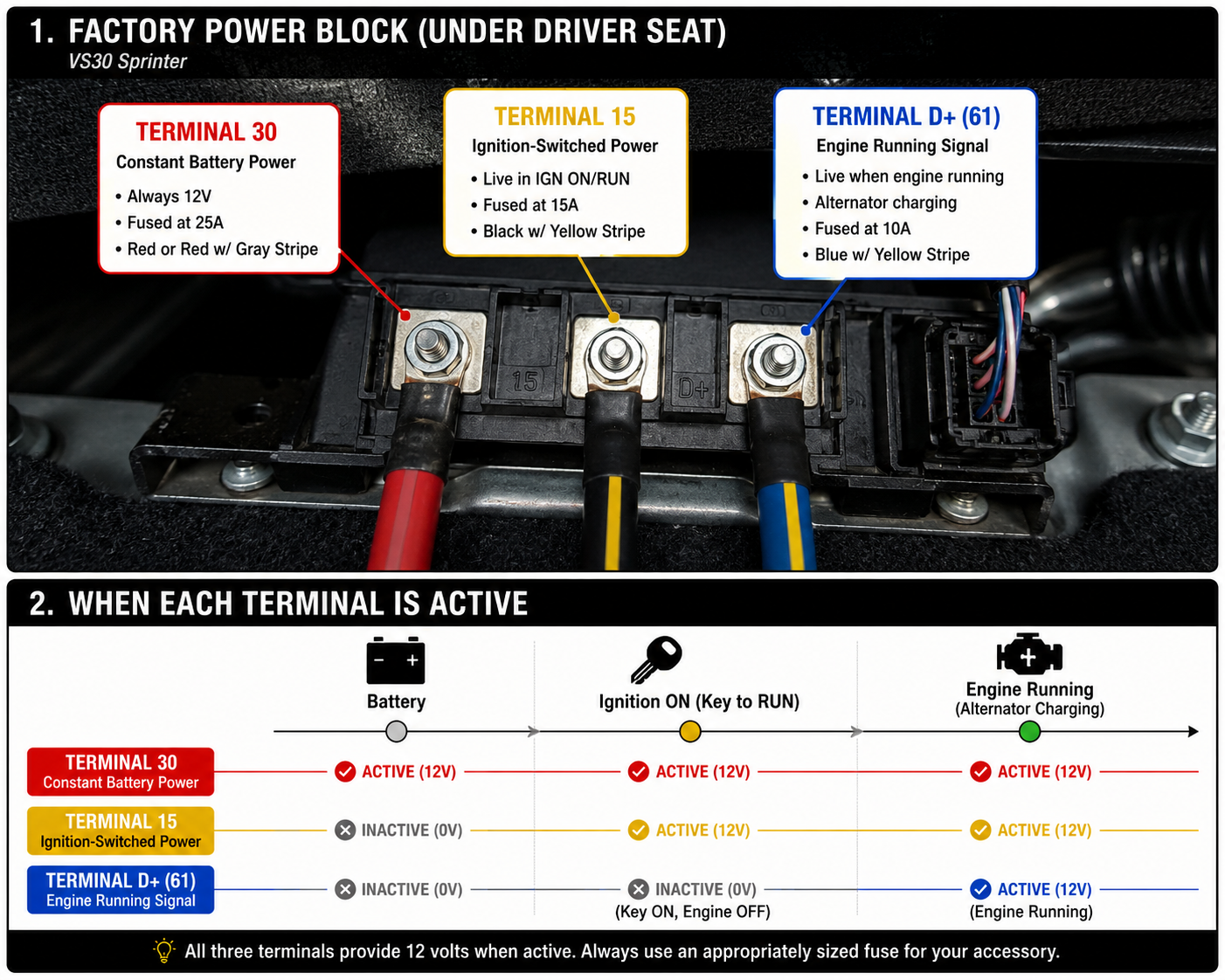
Under the driver's seat is a factory power distribution block that provides several convenient power sources without having to access the battery directly. Let's look at what each terminal provides.
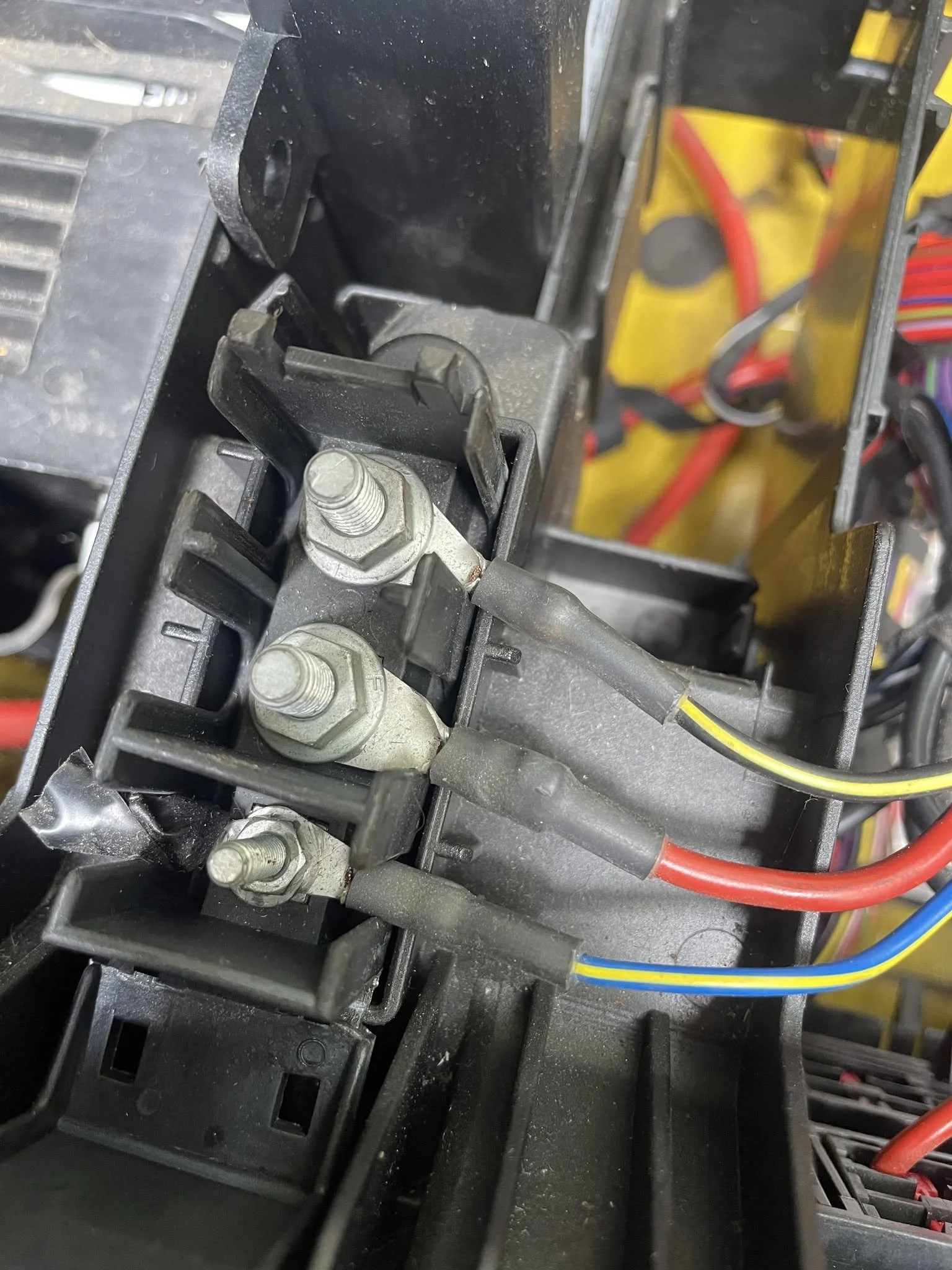
Top down - lets talk about what these wires do.
Red with Gray Stripe (Terminal 30): Constant Battery Power This is a direct connection to the vehicle battery. It remains live at all times, regardless of whether the key is in the ignition.
Always has 12V - Ideal for:
Refrigerators
Battery monitors
Alarm systems
GPS trackers
Memory circuits
Factory fused at 25 amps
Note: Depending on the model year and production date, this wire may be solid red or red with a gray stripe.
Black with Yellow Stripe (Terminal 15): Ignition-Switched Power This circuit only becomes energized when the ignition is in the ON/RUN position. It's perfect for accessories you don't want accidentally draining your battery when the van is parked.
Common uses include:
Dash cameras
Radios
USB charging ports
Auxiliary gauges
Relays for switched accessories
Factory fuse: 15 amps
Blue with Yellow Stripe (Terminal D+ / 61): Engine Running Signal This terminal is often misunderstood.
It does not simply turn on with the ignition. Instead, it only becomes active once the engine is actually running and the alternator is charging. This makes it incredibly useful for equipment that should only operate while the engine is running.
Typical applications include:
DC-DC battery chargers
Automatic battery isolators
Inverters
High-current relays
Auxiliary systems that should never operate with the engine off
Factory fuse: 10 amps
Which One Should You Use?
Recommended Terminal
Terminal 30
Terminal 15
Terminal 15
Terminal 30
Terminal 30
D+
D+
Accessory
Refrigerator
Dash Camera
USB Chargers
GPS Tracker
Battery Monitor
DC-DC Charger Trigger
Auxiliary Relay Trigger
Remember that these circuits are intended as convenient power sources for moderate loads. If you're installing a large inverter, air compressor, heater, or another high-current accessory, it's still best practice to run an appropriately sized fused cable directly from the battery.
Make Future Upgrades Easier
One trick that has saved me a lot of time is installing a small auxiliary fuse or terminal block under the driver's seat.
Rather than removing the seat every time you add another accessory, you can run short extensions from the factory terminals to a more accessible fuse panel or distribution block. Future additions become as simple as connecting to your new terminal instead of digging back into the factory wiring.
It's one of those small upgrades that pays for itself after the second or third accessory installation.
Mercedes actually made accessory installation easier than many people realize. Once you know what each terminal does, the factory power distribution block becomes one of the handiest features on the van.
Whether you need constant battery power, ignition-switched power, or a true engine-running signal, everything is already waiting for you under the driver's seat—no need to crawl under the floor and access the battery every time you add another upgrade.
Our other electrical blog posts
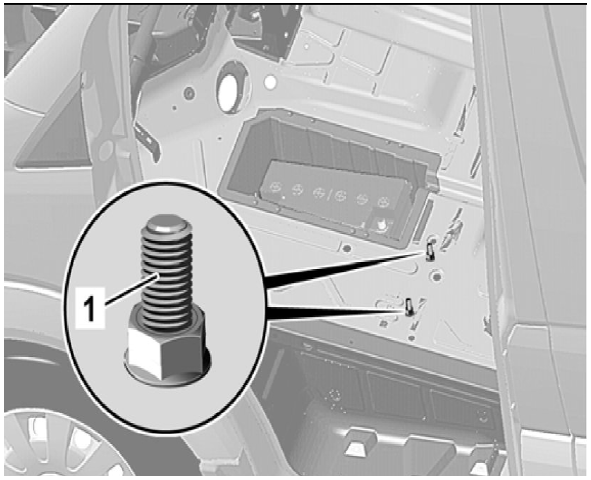


So you want to add something in your van but you need a 12V power source from your battery. The trouble is the battery for the Sprinter Van is locked away in a box underneath the floor right beneath the drivers feet.